Table of Contents
Managing stress naturally is something anyone can do no pills, no gadgets just your breath. In daily life, feeling tense or overwhelmed is perfectly normal but when stress sticks around, it starts to wear on our minds and bodies. The good news? Simple breathing techniques can calm the nervous system, lower stress hormones and help you feel grounded all in just a few quiet moments.
Why Breathing Helps?
When you’re stressed, your body goes into “fight-or-flight” mode heart races, breathing gets shallow, muscles tense. But breathing is also something you can control. Taking deep, slow breaths activates your parasympathetic nervous system (your “rest-and-digest” mode) which opposes stress. Research shows that breathing practices can reduce anxiety, improve mood and lower your heart rate and blood pressure.
Top Breathing Techniques to Manage Stress Naturally
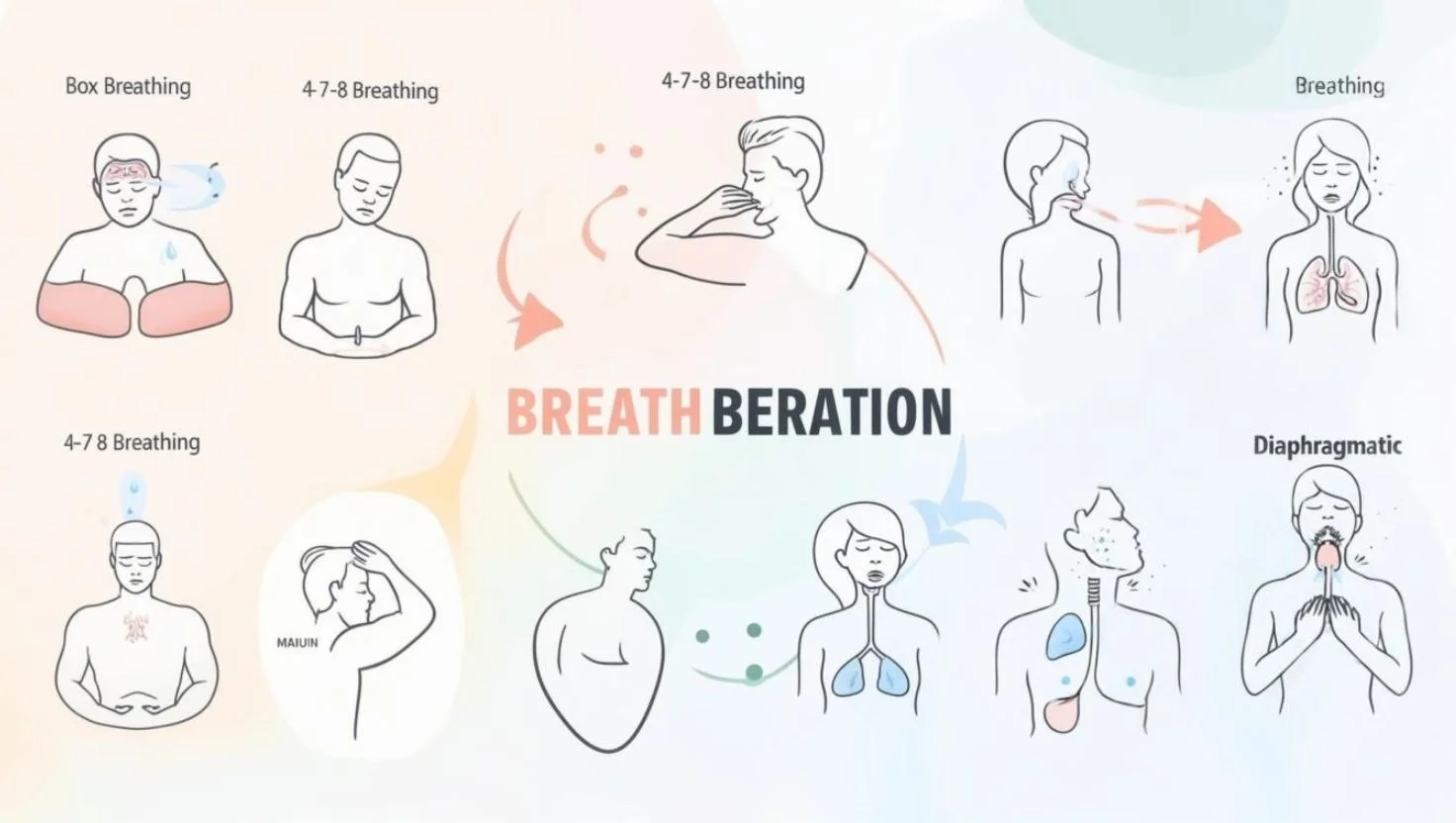
1. Diaphragmatic (Belly) Breathing
What it is: Let your belly rise and fall instead of your chest. This helps activate your diaphragm and quickly lowers stress levels.
How to do it:
- Sit or lie comfortably, one hand on chest, one on belly.
- Breathe in gently through your nose, letting your abdomen rise as you fill your lungs.
- Exhale gently through your mouth.
- Continue for 5–10 minutes.
People shift from shallow chest breaths to deep belly breaths and feel tension ease.
2. Box or Square Breathing (4‑4‑4‑4)
What it is: A rhythmic breath counting technique that balances inhalation, holding, exhaling and holding.
Steps:
- Exhale fully.
- Inhale for 4 counts.
- Hold for 4 counts.
- Exhale for 4 counts.
- Hold again for 4 counts.
- Repeat 4–5 cycles.
Popular in high-pressure fields (like military) and shown to increase calm and focus.
3. 4‑7‑8 Breathing
What it is: A version of “relaxing breath” to slow heart rate and wind down.
Steps:
- Exhale completely through your mouth.
- Inhale through your nose for 4 counts.
- Hold breath for 7 counts.
- Exhale through your mouth for 8 counts.
- Repeat 4 cycles.
This stimulates the vague nerve and eases your nervous system.
4. Cyclic Sighing
What it is: Two small inhales, then a long exhale to soothe the mind instantly.
Steps:
- Inhale through your nose to fill lungs halfway.
- Add a small second “sip” of air.
- Exhale slowly, making a long sigh.
- Continue for 5 minutes daily.
Research shows it improves mood and slows breathing more than meditation.
5. Alternate Nostril Breathing (Nadi Shodhana)
What it is: A yogic breath practice that gently restores balance to the body and mind.
Steps:
- Sit comfortably.
- Close right nostril with thumb, inhale through left.
- Close left with ring finger, exhale through right.
- Inhale through right, then close right, exhale left.
- Repeat for 5–10 minutes.
Research shows it helps reduce heart rate and blood pressure, bringing a sense of calm.
How Often to Practice?
- Daily: Even 5 minutes of any technique can work wonders.
- Before stress spikes: Use box or 4‑7‑8 breathing before meetings or exams.
- Evening routine: Cyclic sighing or diaphragmatic breathing help calm you before bed.
Tips for Success
- Posture matters: Sit with a straight back or lie down this lets your lungs expand fully.
- No judgment: Focus on your breath without stress. It’s a break, not a performance.
- Use apps: For pacing, consider free apps like Breath+ or built-in timers.
- Pair with other calm habits: Add gentle stretches, soft music, humming, or chanting to deepen the effect.
What Science Says?
- Controlled breathing boosts parasympathetic tone and calms the autonomic nervous system.
- Daily 5‑minute sighing improved mood and breathing rhythms in clinical trials.
- Techniques like box breathing, diaphragmatic breathing, and alternate nostril breathing can help lower heart rate, reduce blood pressure and ease anxiety.
Natural Ways to Manage Stress Without Medication
- Practice diaphragmatic breathing daily: Studies show these lowers cortisol levels and heart rate, helping your body relax naturally.
- Try mindfulness or meditation: Research from Harvard found regular meditation can shrink the brain’s stress center (the amygdala) and boost calm.
- Exercise gently: Even a 20‑minute walk can increase endorphins, your body’s natural mood lifters, without needing pills.
- Eat stress‑supportive foods: Foods rich in magnesium (like leafy greens) and omega‑3s (like walnuts) help balance mood and reduce anxiety.
- Use rhythmic techniques like box breathing or 4‑7‑8 breathing: These slow breathing rates, activate the vague nerve, and calm your nervous system.
- Try cyclic sighing: Just 5 minutes daily was shown in a Stanford study to reduce anxiety and boost positive mood more than mindfulness alone.
- Create calming daily habits Listening to soft music, journaling or sipping herbal teas like chamomile gently reduce tension.
- Prioritize good sleep: Following a consistent bedtime routine naturally lowers stress hormones and refreshes your mind overnight.
FAQ
1. Can anyone do it?
Yes! Any age, fitness level or location just peace and posture.
2. How soon will I feel results?
Usually within a couple of minutes you’ll feel calmer, long-term benefits in weeks.
3. Can breathing replace therapy?
It’s a great complement but not a substitute for therapy or meds when needed.
Conclusion
Breathing is a simple, free, natural tool waiting inside you. Techniques like diaphragmatic breathing, box breathing, 4‑7‑8 rhythm, cyclic sighing and alternate nostril breathing are easy to learn, backed by science and work fast. Integrate them into your day at morning, midday or night and notice one simple truth: managing stress naturally starts with a breath.
You now have everything needed: what each technique does, how to do it, how often and why it helps. When stress knocks, you’ll already know your natural lifeline.