Table of Contents
- What is PayPal and How Does It Work?
- Create and Verify a PayPal Account
- Login, Access & Account Management
- PayPal Fees & Exchange Rates
- Sending & Receiving Money with PayPal
- Safety & Security Features
- PayPal Credit, Pay in 4 & Financing Options
- PayPal in 2025: Updates & Future Trends
- Alternatives & Competitors
- Bottom Line
PayPal is still the most recognized name in online payments as we head into 2025. This guide delivers everything you need before the next calendar page turns—from logging in after a redesign to spotting hidden fees and comparing viable alternatives.
What is PayPal and How Does It Work?
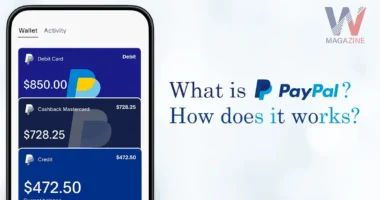
PayPal is a digital wallet that links bank accounts, cards or a stored balance to your email address. Instead of exposing card numbers to merchants, users supply an email. PayPal then settles with the merchant, while debiting funding sources behind the scenes.
Funds can travel as purchases, personal payments to friends, business invoices, or donations. The whole flow occurs in real time and works across 200+ countries and 25 currencies.
Learn more about What is PayPal & How Does it Work?
Create and Verify a PayPal Account
Dormant accounts opened in 2023 will not automatically qualify for 2025 policy changes. A new onboarding path came live in December 2024.
- Download the app or visit paypal.com: Choose Personal or Business; AI-based questionnaire tailors setup in under two minutes.
- Provide identity details: Legal name, address, and mobile number replace the old email-confirmation loop for faster KYC verification.
- Link a funding source: Instant bank verification via Plaid is the default; manual micro-deposits remain as a fallback.
- Set up two-factor auth: Opt for device biometrics plus backup SMS/email. Account status becomes fully verified once Plaid returns confirmed micro-deposit details.
Result: zero sending limits and immediate access to PayPal Credit and Pay in 4.
Check out more details on PayPal Account Setup: Step-by-Step Verification Guide
Login, Access & Account Management
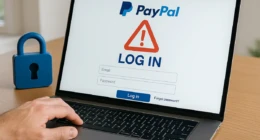
PayPal’s login portal received a visual refresh for 2025. Biometric fallback for desktop browsers now matches mobile.
- One-tap push login replaces the old 6-digit one-time code on supported devices.
- Guest checkout decisions made earlier in 2024 are now centralized under Settings > Privacy > Login History.
- Passwordless Autofill means you can authenticate via Face ID or Windows Hello inside Chrome and Edge on compatible PCs.
If you ever lose your primary phone, the “Account Recovery Orchestra” triggers: backup email, trusted device confirmation and photo ID upload finish in under five minutes.
PayPal Fees & Exchange Rates
Fees look similar yet hide meaningful nuances introduced throughout 2024.
| Scenario | US Domestic | International | FX Mark-up |
|---|---|---|---|
| Purchase funded by card | 3.49% + fixed fee | 4.99% + fixed fee | 4% spread |
| Send to friend via bank balance | $0 | 4% (min $0.99) | 4.5% spread |
| PayPal Credit repayment | $0 | N/A | N/A |
| Marketplace sale | 2.99% + 30¢ | 4.99% | 4% |
New in 2025: PayPal dynamically adjusts FX spread by geolocation—EU merchants pay half a percent less than similar US accounts. Negotiate premium rates once monthly volume crosses $100k.
Sending & Receiving Money with PayPal
Personal transfers still center around an email address or phone number. QR scan-to-send shortcuts are now available worldwide, not just Asia.
For sellers, PayPal invoicing offers drag-and-drop line items, automatic tax calculation for US states, and instant installment buttons (Pay in 4). Funds hit available balance within seconds when the buyer uses an existing PayPal balance or linked bank funds.
- Batch payouts through Hyperwallet support up to 5,000 recipients at once.
- Holding funds in transit is capped at 24 hours for established sellers under the updated Seller Protection Program 2.0.
- Instant Transfer to debit cards is now capped at $50,000 per transaction instead of the old $5,000 ceiling.
Safety & Security Features
PayPal rolled out end-to-end encryption for messages between buyers and sellers in April 2024. The key value to remember: PayPal never teaches merchants your card or bank details.
Built-in Protections
- Purchase Protection: Covered if an item is not received or differs significantly from the listing.
- Seller Protection: Shields merchants against unauthorized transactions and “item not received” claims when proof of delivery is provided.
- Machine-Learning Risk Engine: Blocks high-risk logins before the password is even checked.
User-Controlled Settings
- Security Keys: Generate up to six hardware YubiKeys within your profile.
- Login Alerts: Choose push, SMS or email pings after every authorization.
- Session Timeout: Set windows as tight as 5 minutes for dormant tabs.
On the dark-web-monitoring front, PayPal now partners directly with Equifax to alert you when your SSN surfaces in compromised dumps.
PayPal Credit, Pay in 4 & Financing Options
Pay in 4 remains interest-free if repaid within six weeks. PayPal Credit acts more like a revolving line up to $10,000 with 26.24% APR variable. New for 2025: a “Zero-Fee Carry Forward” option turns Pay in 4 into a micro-loan for $1 per month instead of late fees.
PayPal in 2025: Updates & Future Trends
- AI Receipt Parser: Snap a photo of any receipt; PayPal auto-files returns and refund windows.
- Crypto Checkout 2.0: Solana network support slashes gas costs below ETH.
- Embedded Checkout on TikTok: Direct, one-tap buy option within influencer live streams.
- Stablecoins: PayPal USD (PYUSD) becomes the default balance currency for new accounts, defeating FX spread for US-to-US transactions.
Alternatives & Competitors
Consider alternate services when fees bite or features lag for your use case.
| Service | Best For | Main Drawback |
|---|---|---|
| Stripe | Custom checkout & worldwide card acceptance | No P2P payments |
| Venmo | US social P2P transfers | No international reach |
| Wise | Low FX transfers to 80+ countries | No buyer protection on goods |
| Apple Pay Later | Interest-free installment on iOS devices | Limited to Apple ecosystem |
| Zelle | Instant US bank-to-bank | No purchase protection |
If you process above $500k annually, Stripe’s interchange-plus pricing undercuts standard PayPal business rates by roughly 0.8%.
Bottom Line
In 2025, PayPal blends the familiar one-email checkout with a stack of new security layers, credit wheels and cryptocurrency rails. Evaluate the refreshed fee tables against your transaction geography, then decide whether competitors like Wise or Stripe serve you better for each lane of your financial life.