
Table of Contents
- What is a Pressure Swing Adsorber?
- How Does a Pressure Swing Adsorber Work?
- Main Parts of a PSA System
- Types of Adsorbent Materials Used
- Benefits of Using a Pressure Swing Adsorber
- Where Are PSA Systems Used?
- Advantages and Disadvantages of PSA Technology
- Tips for Getting the Best Results from PSA Systems
- FAQ
- Conclusion
A Pressure Swing Adsorber, commonly called PSA, is a system that separates gases from a mixture by using pressure differences. It’s a smart, energy-efficient way to produce gases like oxygen, nitrogen, or hydrogen without needing large factories or extreme temperatures. This technology is widely used in industries, hospitals, and even in homes for certain gas requirements.
PSA technology is designed to be simple yet effective. It doesn’t rely on complicated machines or deep scientific processes. Instead, it uses basic materials and pressure swings to grab certain gases and leave others behind.
What is a Pressure Swing Adsorber?
A Pressure Swing Adsorber is a machine that separates one or more gases from a gas mixture. It does this by using pressure changes and special materials called adsorbents, which trap certain gases while letting others pass. When the pressure is high, some gas molecules stick to the adsorbent. When the pressure drops, those molecules are released.
This cycle repeats continuously, giving a steady supply of purified gas like oxygen, nitrogen, or hydrogen. Imagine filling a tank with air and using tiny materials inside the tank to capture the gas you want. By increasing and decreasing the pressure, you can control which gases stay and which ones go. That’s the simple beauty of PSA technology.
How Does a Pressure Swing Adsorber Work?
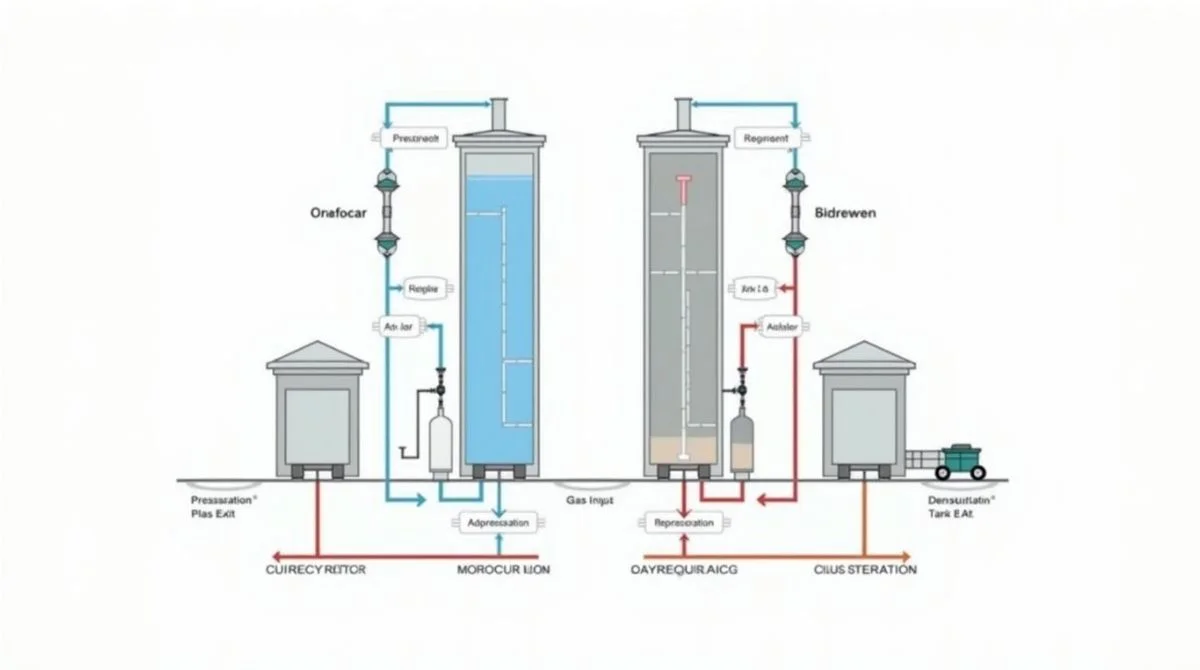
The PSA system works in repeated cycles to provide continuous gas production. Here’s a simple breakdown of the process:
- Pressurization: The gas mixture (like air) enters the system under high pressure.
- Adsorption: Special materials inside the system attract and hold onto specific gas molecules (for example, nitrogen or oxygen).
- Depressurization: The pressure inside the system is lowered, and the trapped gases are released.
- Regeneration: The adsorbent material is cleaned and made ready for the next cycle.
- Repetition: The system repeats this process, switching between tanks to ensure non-stop operation.
Most PSA units have two or more tanks that work together. While one tank is capturing gas, the other is being cleaned and prepared for the next round. This way, there’s always a continuous flow of purified gas.
Main Parts of a PSA System
A typical PSA system has these key components:
- Adsorption Towers: Tall tanks filled with adsorbent materials.
- Adsorbents: Materials like zeolite, carbon molecular sieves, or activated carbon that capture specific gases.
- Valves and Controllers: Direct the gas flow and control the timing.
- Filters: Remove impurities like dust, oil, and water from the incoming gas.
- Gas Storage Tank: Holds the purified gas before it’s used.
Each part plays an important role in ensuring the PSA system works smoothly and efficiently.
Types of Adsorbent Materials Used
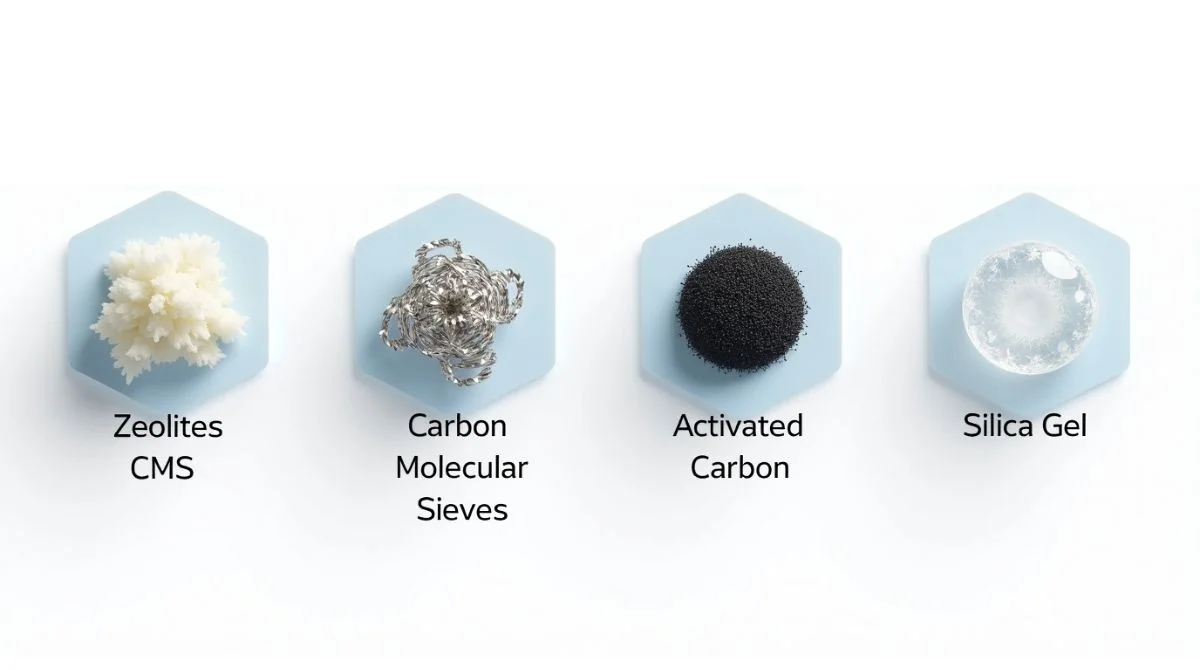
The choice of adsorbent material depends on the type of gas you want to separate:
- Zeolites: Best for separating oxygen from nitrogen.
- Carbon Molecular Sieves (CMS): Ideal for producing high-purity nitrogen.
- Activated Carbon: Removes unwanted impurities like moisture and volatile compounds.
- Silica Gel: Used to control moisture during the separation process.
These materials have tiny pores that selectively trap specific gases based on their size and chemical properties.
Benefits of Using a Pressure Swing Adsorber
PSA systems are popular because they offer several advantages:
- Onsite Gas Production: No need to transport or store large gas cylinders.
- Energy Efficient: Uses less energy than traditional gas separation methods.
- Compact Design: Suitable for small spaces, including hospitals and factories.
- High Gas Purity: Can produce gases with purities above 99% depending on system design.
- Low Operating Costs: Requires minimal maintenance and no extreme temperatures.
- Safe Operation: No hazardous chemicals or high temperatures are involved.
This makes PSA technology suitable for industries, hospitals, laboratories, and even food packaging facilities.
Where Are PSA Systems Used?
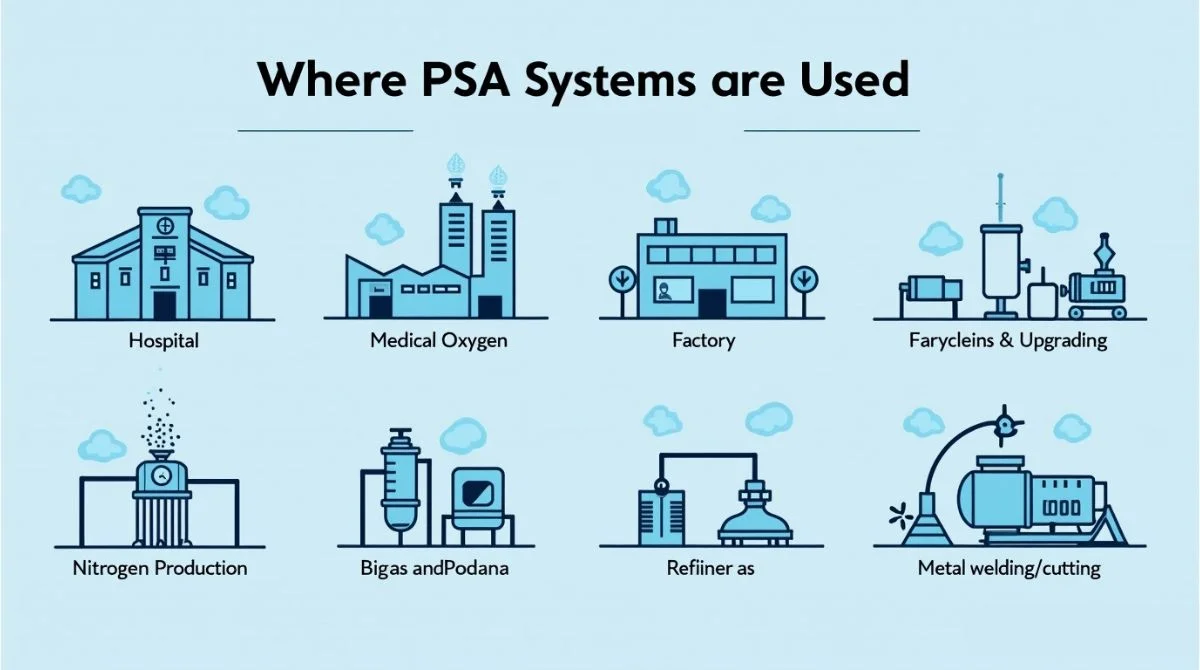
Pressure Swing Adsorbers are used in many everyday and industrial applications, including:
- Medical Oxygen Generation: Hospitals use PSA units to produce oxygen for patients.
- Nitrogen Production: Industries use nitrogen for food packaging, electronics, and chemical processing.
- Hydrogen Purification: Refineries and fuel cell manufacturers use PSA to produce clean hydrogen.
- Biogas Upgrading: Removes carbon dioxide and impurities from biogas to create biomethane.
- Metal Processing: Provides oxygen or nitrogen for welding and cutting metals.
These systems help industries produce gases when and where they are needed, reducing reliance on external suppliers.
Advantages and Disadvantages of PSA Technology
Here’s a quick look at the pros and cons of using PSA:
Advantages:
- Produces high-purity gases.
- Simple and energy-efficient operation.
- Compact and portable designs.
- Continuous gas supply.
- Lower operating costs.
Disadvantages:
- Limited gas production for very large demands.
- Adsorbent materials wear out over time and need replacement.
- Sensitive to moisture and contaminants in the incoming gas.
- Complex control systems may require skilled maintenance.
Even with some limitations, PSA remains a reliable and affordable choice for gas separation in many industries.
Tips for Getting the Best Results from PSA Systems
If you are planning to use a PSA system, follow these tips for smooth operation:
- Ensure the incoming gas is clean and dry to protect the adsorbent materials.
- Regularly check and replace filters to maintain efficiency.
- Monitor pressure levels and system cycles to avoid disruptions.
- Schedule periodic maintenance to extend the life of the adsorbent materials.
- Use high-quality adsorbents suitable for your specific gas needs.
- Proper care and maintenance can significantly improve the performance and lifespan of your PSA system.
FAQ
Q1. What is the difference between PSA and other gas separation methods?
PSA uses pressure changes to capture gases, while other methods may use temperature changes, membranes, or chemical reactions.
Q2. How pure is the gas produced by PSA?
Purity depends on the system design but can range from 90% to over 99% for gases like oxygen or nitrogen.
Q3. Can PSA systems run 24/7?
Yes, with multiple towers operating alternately, PSA systems can provide a continuous supply of gas.
Q4. What gases can be separated using PSA?
Common gases include oxygen, nitrogen, hydrogen, methane, and carbon dioxide.
Q5. How long do the adsorbent materials last?
Typically, adsorbents last 3 to 5 years, depending on usage and care.
Conclusion
A Pressure Swing Adsorber is a simple, reliable, and efficient way to produce clean gases like oxygen, nitrogen, and hydrogen. It works by using pressure changes and special adsorbent materials to trap and release gases as needed. With minimal energy use, compact designs, and the ability to produce gases onsite, PSA systems have become essential in many industries, hospitals, and even renewable energy setups. If you need a constant, high-purity gas supply without the hassle of deliveries or complex systems, a PSA might be the perfect solution.