Table of Contents
- What Does mAh Mean?
- Why the Real-World Capacity Is Lower?
- How Much Power You Actually Get?
- So, Do You Need 50000 mAh?
- Charging Speed & Port Features
- Safety & Build Quality
- Portability: Size Matters?
- Airline & Legal Limits
- Price vs. Value
- Summary Table
- Is a Power Bank 50000 mAh Safe? Key Tips Before You Buy
- FAQ
- Conclusion
When you see “50000 mAh” on a power bank, it sounds impressive. But what does it actually mean and how useful is it for you?
What Does mAh Mean?
- mAh stands for milliampere-hour.
- It measures how much electrical charge a battery can hold.
- Think of it like the fuel tank of a car the bigger it is, the farther it can go.
- So, a power bank rated at 50000 mAh has a much larger “tank” than a 10000 mAh one.
Why the Real-World Capacity Is Lower?
Manufacturers state the internal battery’s raw capacity, but after you plug it in and the electronics do their job, you actually get less power:
- Voltage conversion losses: Battery cells output at ~3.7 V, but USB needs 5 V. That conversion is 10–30% inefficient.
- Heat & internal resistance: Energy is wasted as heat while charging and discharging.
- Advertised capacity: So realistically, you’ll see about 65–80% of the advertised capacity.
How Much Power You Actually Get?
Let’s do the math:
- Advertised, 50000 mAh.
- Expected real capacity 50000 × 0.75 = 37500 mAh.
- If your phone’s battery is around 4000 mAh, you get:
37500 ÷ 4000 ≈ 9 full charges.
This example shows you can depend on it during long trips or power outages.
So, Do You Need 50000 mAh?
That depends on your lifestyle and needs:
- Everyday phone use: A 10000–20000 mAh power bank is usually enough.
- Traveling, camping, remote work: A 50000 mAh model is ideal it can recharge multiple devices multiple times.
- Heavy device usage: Want to charge laptops, tablets, and drones? A big one gives you backup without outlets.

Charging Speed & Port Features
Capacity is one thing, but output is also important:
- Look for PD (Power Delivery) and QC (Quick Charge) support for fast charging.
- Check output wattage: 20–30 W is good for phones, and 65 W+ is better for laptops.
- Multiple USB-A, and USB-C ports let you charge more than one device at once.
Safety & Build Quality
High-capacity models must be safe:
- Ensure they include overcharge, temperature, and short circuit protections.
- Good brands also add certified battery cells and voltage monitoring, improving lifespan and reliability.
Portability: Size Matters?
A 50000 mAh power bank is big and heavy (0.5–1 kg, ~15–23 oz). If it’s just for daily carry, it could be inconvenient. But for travel or emergency use, it’s a powerful backup.
Airline & Legal Limits
Most airlines restrict batteries over 100 Wh, which translates to about 27000 mAh at 3.7 V. A 50000 mAh power bank is over this limit, so you’ll need airline approval or check guidelines.
Price vs. Value
Big capacity usually means a higher price, but the cost per mAh often drops with size:
- Value-wise, larger models can be cheaper per unit of energy.
- Sizes vs. needs: Opt for what you use, don’t pay for extra capacity you’ll never use.
Summary Table
| Feature | What 50000 mAh Means |
| Capacity | Huge raw 50,000 mAh (~185 Wh) battery |
| Usable Energy | Around 37,500 mAh after inefficiencies |
| Charges (phone~4000 mAh) | ≈ 9 full charges |
| Portable? | Bulky and heavy great for travel, not for pocket carry |
| Fast charging | Supports fast charging with PD/QC if included |
| Safety features | Look for modern protections and quality certifications |
| Air travel | Likely exceeds the typical 100 Wh limit, check airline rules |
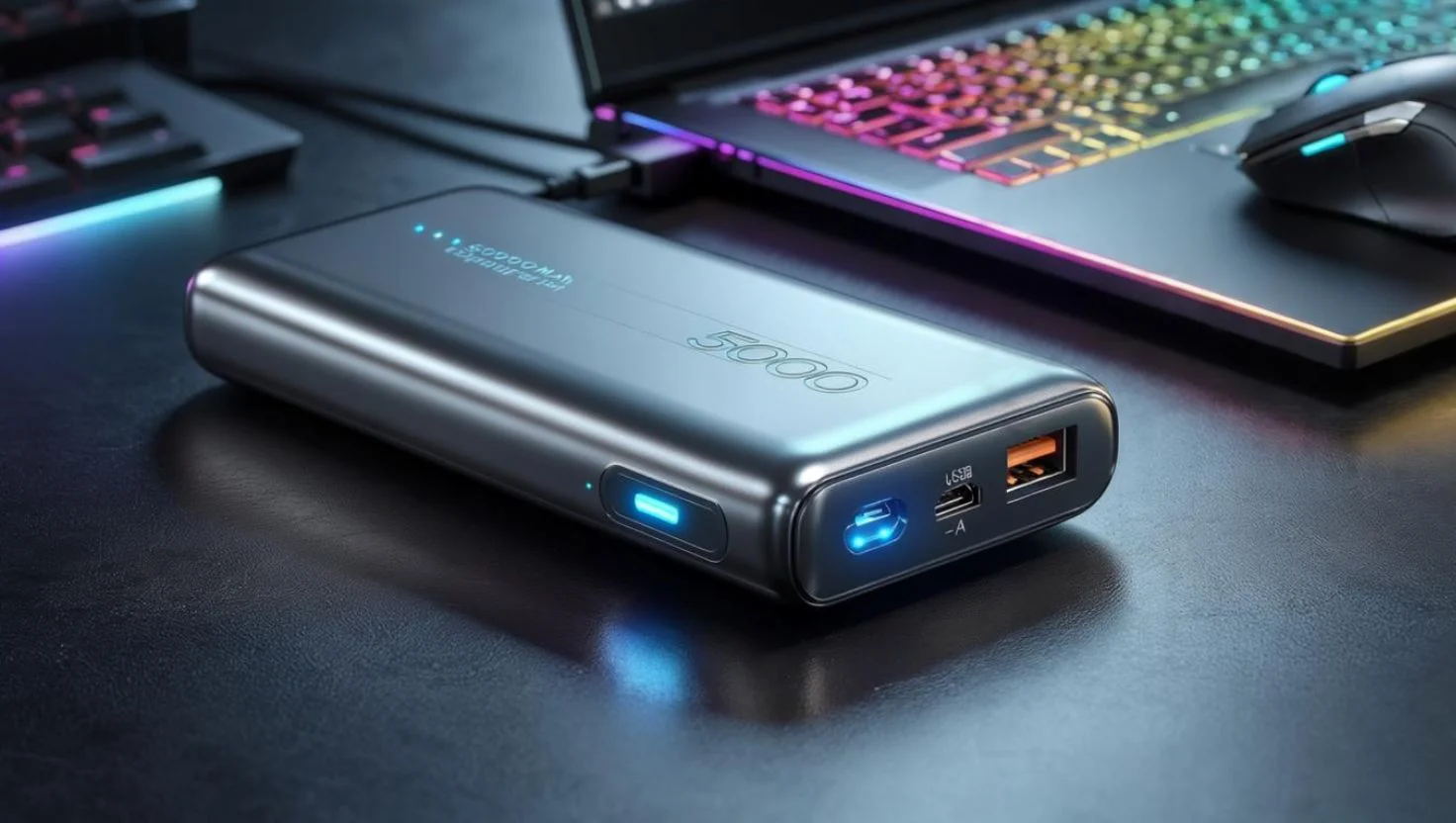
Is a Power Bank 50000 mAh Safe? Key Tips Before You Buy
- High-capacity power banks like 50000 mAh can be safe if you choose models from trusted brands with proper safety certifications.
- Look for built-in protections such as overcharge, over-discharge, short-circuit, and temperature control.
- Make sure the power bank has passed CE, FCC, or BIS certification for quality assurance.
- Avoid using damaged cables or exposing the power bank to water or extreme heat.
- Check whether it supports smart output regulation to match your device’s needs safely.
- Remember, very large power banks can be heavy and may exceed airline limits (over 100 Wh).
- Always purchase from trusted or authorized sellers to avoid fake or low-quality products.
FAQ
Q1. Is a power bank 50000 mAh safe to use?
Yes, it is usually safe if you buy a good quality power bank from a trusted brand. Make sure it has safety features like overcharge and short circuit protection.
Q2. Can I take a 50000 mAh power bank on an airplane?
Mostly no. Many airlines allow power banks up to around 27000 mAh (or 100 Wh). A 50000 mAh power bank is bigger than this limit, so it might not be allowed. Always check airline rules first.
Q3. Why does a power bank get hot when charging?
It can get a bit warm because energy turns into heat. But if it becomes too hot, stop using it right away it could mean there’s a problem.
Q4. How many times can a 50000 mAh power bank charge my phone?
It depends on your phone’s battery size but normally it can charge a regular phone about 8–10 times before it runs out.
Q5. What should I check before buying a power bank 50000 mAh?
Check for:
- Safety certificates (like CE, FCC, and BIS).
- Built-in protections (overheat, overcharge).
- Good reviews and warranty from the seller.
Conclusion
A 50000 mAh power bank offers massive capacity, making it perfect for travel, emergencies, or heavy device usage. While it’s not ideal for everyday pocket carry due to its size, it provides excellent value if you truly need the extra power. Just make sure to choose a reliable brand with proper safety certifications and check airline rules before flying with it.