
Table of Contents
- What Is Fluid Mechanics?
- Key Concepts in Fluid Mechanics
- What Are Hydraulic Machines?
- Why They Matter?
- Real World Examples
- Importance of Fluid Mechanics and Hydraulic Machines
- Applications of Fluid Mechanics and Hydraulic Machines
- Why Students Should Learn Fluid Mechanics and Hydraulic Machines?
- Future Trends
- FAQs
- Conclusion
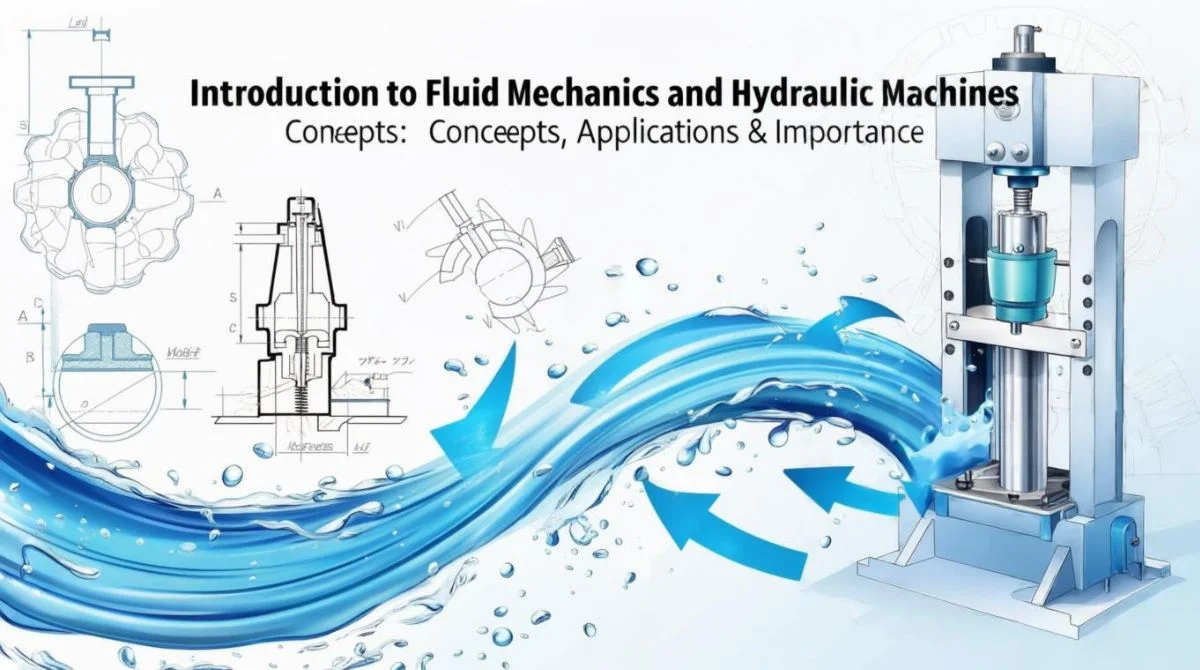
Fluid mechanics and hydraulic machines explain how liquids and gases behave under force and how we use this knowledge to make pumps, turbines and more. Whether it’s pumping water into cities, generating clean energy or powering vehicles, these systems play a vital role in everyday life. In this article, you’ll grasp core concepts, see real life examples and understand why this field is so important all in easy-to-understand language.
What Is Fluid Mechanics?
Fluid mechanics is the branch of science that explores how liquids and gases flow and how different forces influence their movement. It explains why water flows downhill, how air carries an airplane wing or how pressure builds in pipes. Scientists have long studied fluid behavior from Archimedes’ buoyancy principle to modern computational fluid dynamics.
It splits into two parts:
- Fluid statics which look at fluids at rest (like water pressure in a tank).
- Fluid dynamics which examine moving fluids (like water through a pipe).
Key Concepts in Fluid Mechanics
Understanding these basics helps explain fluid behavior and design better systems.
Fluid Properties
- Density measures mass per volume (how heavy a fluid is).
- Viscosity shows how thick or sticky a fluid is for example, honey has higher viscosity than water.
- Pressure is the force the fluid exerts per area critical in engines, pipelines and hydraulics.
Pascal’s Law
This principle says when pressure is applied to a confined liquid, it’s transmitted equally throughout. That’s how small inputs can create big forces, as in hydraulic jacks and presses.
Bernoulli’s Principle
With moving fluids, energy shifts between pressure, height, and speed. For example, faster water in a pipe means lower pressure, which helps explain airplane lift or venturi systems.
Continuity Equation
If fluid flows through different pipe sizes velocity changes. A narrow pipe speeds it up, a wider one slows it. The flow rate stays the same.
Navier Stokes Equations
These describe how viscous fluids move. They’re complex math beasts and behind advanced simulations (CFD), letting engineers virtually test designs.
What Are Hydraulic Machines?
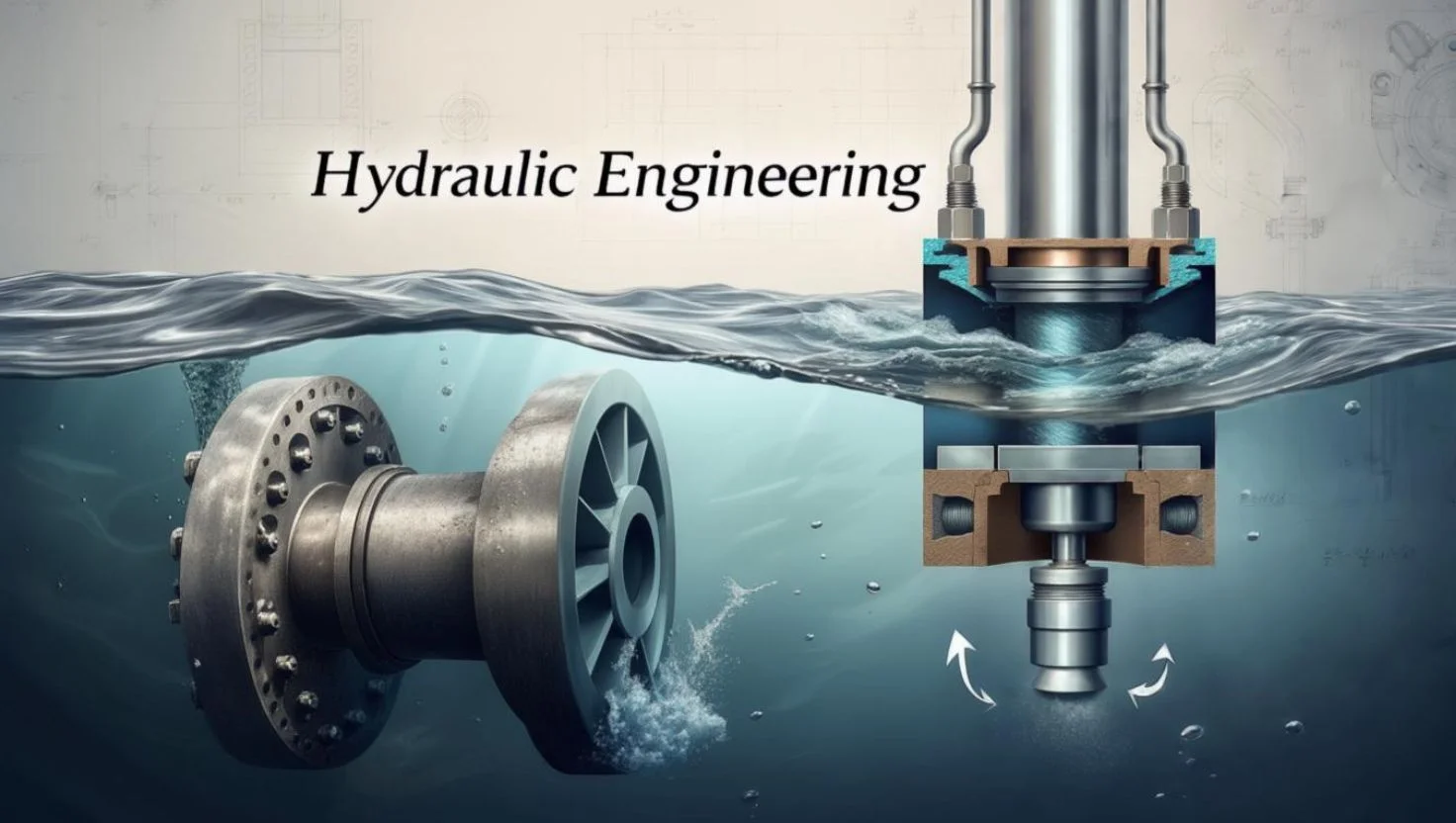
Hydraulic machines are tools that use the power of fluids to perform work. They rely on fluid mechanics principles to move heavy loads, generate electricity or operate tools smoothly.
Common Types
- Pumps add energy to fluids, making them flow used in irrigation, water supply, engines and factories.
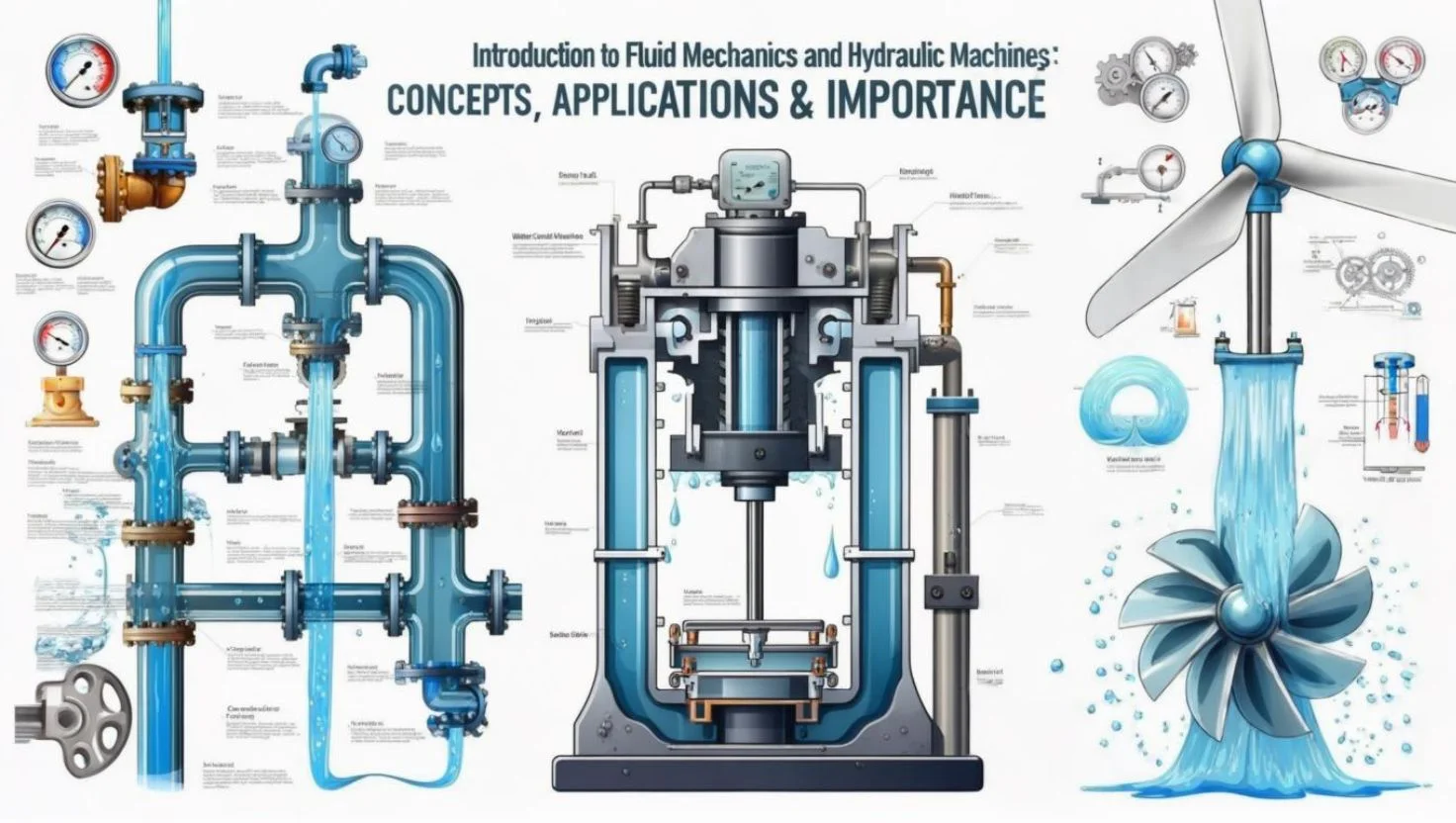
- Turbines extract energy from flowing fluids found in hydroelectric plants, where they convert moving water into electricity.
- Hydraulic presses and jacks multiply force: small input creates huge output using Pascal’s law.
- Hydraulic cylinders and motors power vehicle brakes, steering, construction cranes and more.
Why They Matter?
Fluid mechanics and hydraulic machines underpin countless systems around us:
- Water distribution: pumps move clean water to homes and treat wastewater.
- Energy production: turbines in hydroelectric plants generate clean power.
- Construction and industry: machines such as excavators, presses, and lifts rely on hydraulic systems.
- Transport: airplanes rely on fluid flow over wings; hydraulic brakes and power steering use liquid pressure.
- Manufacturing: fluid control helps in chemical processes, heating, cooling and moving materials.
Real World Examples
1. Hydroelectric Power
In hydro plants, water surges through penstocks, spinning turbines that drive generators. Modern Francis turbines are efficient (up to 95%) and handle different water flows.
2. Hydraulic Press
These machines use a small piston to pressurize oil, which then moves a larger piston multiplying force. Applied in metal forming and car work, they’re common in shops thanks to Pascal’s law.
3. Vehicle Systems
Car brakes use hydraulic fluid: pressing a pedal directs pressure equally to brake calipers, slowing wheels. Power steering works similarly, making turning easy.
Importance of Fluid Mechanics and Hydraulic Machines
Fluid mechanics and hydraulic machines matter because they help us to:
- Design efficient water supply and drainage systems.
- Build large-scale projects like dams, irrigation canals and flood control systems.
- Develop renewable energy solutions like hydroelectric power plants.
- Create safer and faster transportation systems, including airplanes, ships and cars.
- Optimize industrial processes involving fluids, such as oil refineries and chemical plants.
Without understanding fluid mechanics and hydraulic machines, modern life as we know it would not be possible.
Applications of Fluid Mechanics and Hydraulic Machines
Fluid mechanics and hydraulic machines are used in many areas of daily life and industry, including:
- Hydroelectric power plants.
- Turbines change the potential energy of water into electrical power.
1. Water supply systems
Pumps transport clean water to homes and industries.
2. Agriculture
Irrigation systems use pumps and pipes designed using fluid mechanics principles.
3. Automotive industry
Hydraulic brakes, steering systems and shock absorbers rely on hydraulic machines.
4. Aerospace
Fluid dynamics helps design efficient airplane wings and jet engines.
5. Chemical and food industries
Mixing, heating and transporting fluids safely and efficiently.
Why Students Should Learn Fluid Mechanics and Hydraulic Machines?
For engineering students, fluid mechanics and hydraulic machines are essential subjects because:
- They combine theory with practical applications.
- They are required in exams, projects and real-life engineering work.
- Understanding them helps students become better engineers, designers and problem solvers.
Even if you don’t specialize in this field, knowing the basics can help you understand many engineering systems around you.
Future Trends
- Computational Fluid Dynamics (CFD) keeps evolving, helping design better turbines, pumps and systems using virtual tests.
- Smart hydraulics: integrate sensors and AI for predictive maintenance reducing downtime.
- Green energy: new ideas in wave and tidal power depend on advanced fluid mechanics.
- Microfluidics: tiny fluid systems enabling medical tools like lab on chips, drug delivery devices.
FAQs
What’s the main difference between pumps and turbines?
Pumps add energy (raise pressure/flow), while turbines extract energy (lower pressure/flow) from fluids.
Why learn fluid mechanics before hydraulic machines?
Hydraulic machines are built on fluid principles understanding fluid behavior helps design safer, more efficient machines.
Are hydraulic machines still used today?
Yes, hydraulic systems are favored for force, control and adaptability in construction, transport and manufacturing.
Conclusion
Learning fluid mechanics and hydraulic machines gives you keys to manage fluids and design powerful, efficient systems. From pumping water in cities to generating electricity and powering vehicles, this field is everywhere. With future trends like simulations, AI and green tech, the field is more exciting and relevant than ever.