
Table of Contents
- Why should you get Proper Sleep?
- Stick to a Consistent Sleep Schedule
- Make Your Bedroom a Sleep Sanctuary
- Limit Blue Light Before Bed
- Create a Relaxing Bedtime Routine
- Watch What and When You Eat & Drink
- Get Daylight & Move Daily
- Use the 10–3–2–1 Rule
- Try Relaxing Sounds or Music
- Mind Your Bedroom Temperature
- Don’t Force Sleep
- Consider Cognitive Behavioral Techniques (CBT-I)
- Add Fruits, Veggies & Fiber
- Nap Right (If needed)
- Summer-Specific Adjustments
- Seek Help if Problems Persist
- Night Routine Checklist
- Conclusion
Sleep is essential for feeling refreshed, healthy and ready to face the day. To improve sleep quality, small nightly habits when done right can transform how well and how deeply you sleep. Let’s explore simple, effective tips that work with your body’s rhythm and help you wake up energized.
Why should you get Proper Sleep?
Not sleeping enough doesn’t just make you tired it can affect nearly every part of your mind and body. Here’s what can happen:
1. Poor focus and memory
Lack of sleep makes it harder to think clearly, remember things and stay focused. Even missing a few hours can lower your attention span and decision-making ability.
2. Mood changes
Sleep loss often leads to feeling irritable, anxious or sad. Over time, it can raise your risk of depression and make stress harder to handle.
3. Weight gain and cravings
Not getting proper sleep changes hormones like ghrelin and leptin that control hunger, making you feel hungrier often craving sugary or fatty foods. This can lead to weight gain.
4. Weaker immune system
Without enough sleep, your immune system can’t fight off colds, flu, or other infections as well. Research shows people who sleep less than 7 hours are almost 3 times more likely to catch a cold.
5. Higher risk of heart problems
Poor sleep is linked to high blood pressure, irregular heartbeat, and higher risk of heart disease and stroke.
6. Blood sugar and diabetes
Sleep helps control how your body uses insulin. Too little sleep can raise blood sugar levels and increase the risk of type 2 diabetes.
7. Low energy and slower reaction time
Being tired slows reflexes, which is dangerous while driving or using machinery. Drowsy driving can be as risky as drunk driving.
8. Inflammation and aging
Chronic lack of sleep raises inflammation in your body, which can speed up aging and worsen conditions like arthritis.
9. Hormonal imbalance
Sleep helps balance many hormones including those that control stress, growth and appetite. Without enough rest, these systems get disrupted.
Stick to a Consistent Sleep Schedule
Going to bed and waking up at the same time every day even weekends reinforce your body clock and helps you fall asleep faster and sleep deeper. This regularity supports your natural sleep wake cycle.
Make Your Bedroom a Sleep Sanctuary
- Keep it cool, dark, and quiet: Aim for about 16–19 °C (60–67 °F). Use blackout curtains, earplugs or white noise to block distractions.
- Use the bed for sleep and nothing else: Avoid working, eating or scrolling in bed this trains your mind to see bed as a sleep zone.
- Pick comfy bedding: A supportive mattress and hypoallergenic pillow help improve rest.
Limit Blue Light Before Bed
- Screens emit blue light, which suppresses melatonin the hormone that tells your body it’s time to sleep.
- Try dimming or turning off screens at least 1–2 hours before.
- Using blue-light filters or night-mode settings.
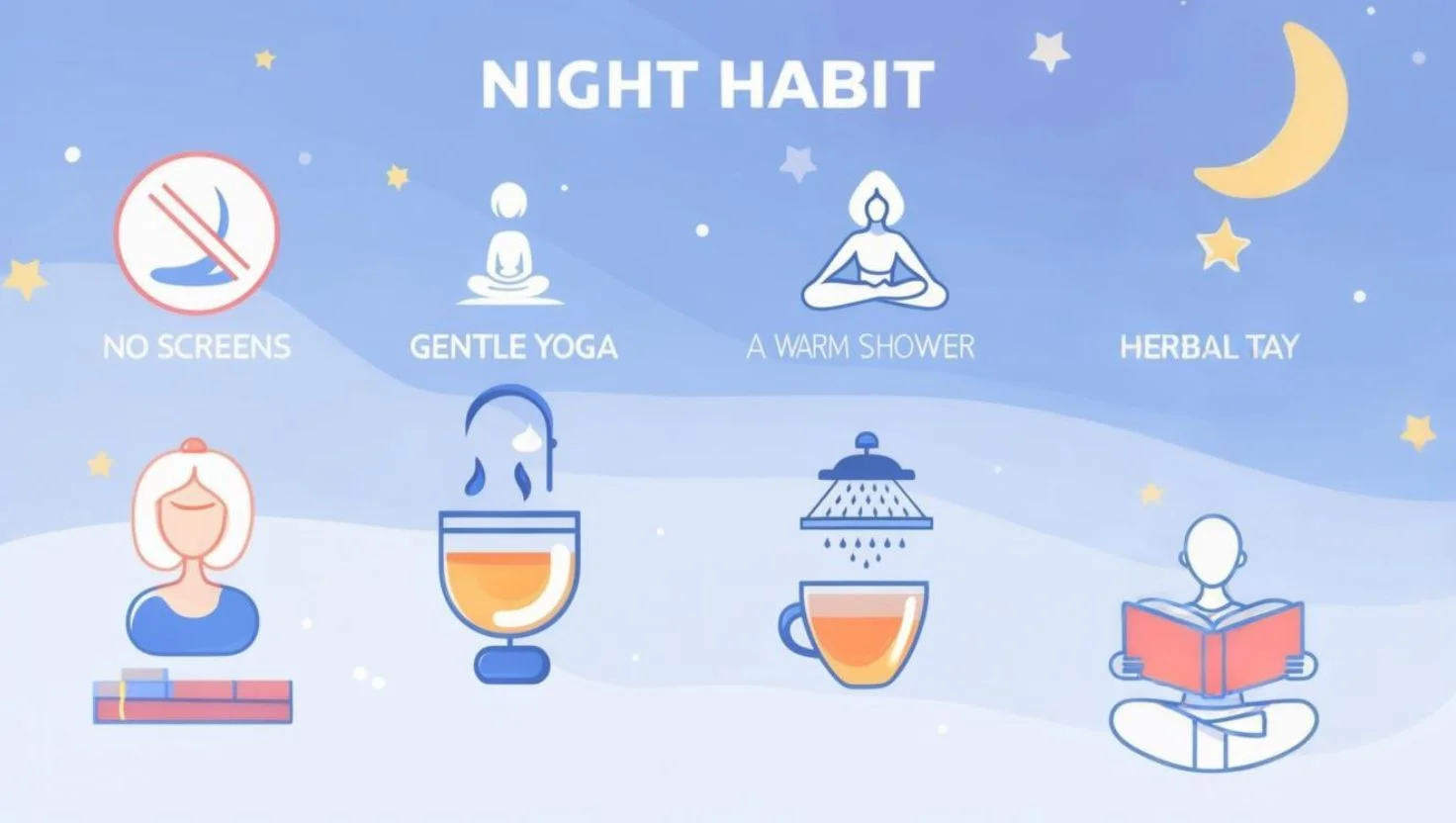
Create a Relaxing Bedtime Routine
A nightly routine gives your brain a signal to wind down:
- Take a warm shower or bath 1–2 hours before sleep this helps your body relax.
- Sip herbal tea, read a calm book, meditate or enjoy soft music.
- Practice breathing or gentle yoga to reduce stress.
- Journaling or gratitude lists can ease a racing mind.
Watch What and When You Eat & Drink
What you consume affects your sleep:
- Avoid caffeine after midday its effects last 6–8.
- Skip alcohol near bedtime it may help you sleep initially but fragments it later.
- Finish dinner 2–3 hours before bed. If hungry, have a light snack like whole-grain crackers or fruit.
- Drinking too much late can disrupt sleep with bathroom trips.
Get Daylight & Move Daily
- Spend time outside or in bright light during the day to set your circadian rhythm.
- Exercise boosts sleep hormones and health but avoid vigorous activity 2–4 hours before bed.
- If you must exercise later, choose gentle evening yoga or stretching.

Use the 10–3–2–1 Rule
A structured routine that clears your mind and body before sleep:
- Stop caffeine 10 hours before bed.
- Avoid food and alcohol 3 hours before bed.
- Finish work by 2 hours before bed.
- Turn off screens 1 hour before bed.
- Wake without hitting “snooze” 0 times.
Try Relaxing Sounds or Music
Gentle music before bed has shown to:
- Decrease stress and heart rate.
- Increase deep sleep and better sleep quality.
- Pick slow-tempo tracks or ASMR recordings to help you drift off.
Mind Your Bedroom Temperature
- Your body cools slightly as you fall asleep. A cooler room helps signal this internal change.
- Keep it around 16–19 °C and use breathable bedding layers.
Don’t Force Sleep
If you can’t sleep after 20 minutes:
- Leave the bedroom and do a quiet, relaxing activity like reading.
- Return when you feel sleepy.
- This avoids stress and stops your bed from becoming a source of anxiety.
Consider Cognitive Behavioral Techniques (CBT-I)
CBT-I helps rewire thoughts and habits around sleep:
- Stimulus control: keep your bed just for sleeping.
- Sleep restriction: limit time in bed to match actual sleep.
- Relaxation training: journaling and breaking negative sleep beliefs. These methods often outperform sleep medications over time.
Add Fruits, Veggies & Fiber
Diet affects sleep too:
- A study showed people who ate 5 cups of fruits/veggies had 16% better sleep quality the very next night.
- Eating more fiber, whole grains, fruits, legumes and fish can help you sleep more deeply.
Nap Right (If needed)
If you didn’t sleep well, taking a short nap of about 10–20 minutes in the early afternoon can help you feel refreshed but avoid long or late naps that can hurt nighttime sleep.
Summer-Specific Adjustments
Hot nights and light summers may disrupt your rest. Use blackout curtains, keep the room cool, avoid late socializing or alcohol and deal with allergies to stay comfortable and asleep.
Seek Help if Problems Persist
If none of these habits help:
- You might need to talk to a healthcare provider there could be sleep apnea, restless legs, or insomnia.
- A specialist may suggest CPAP therapy, oral devices or guided coaching.
Night Routine Checklist
| Habit | What to Do |
| Schedule | Same sleep and wake times daily |
| Light | Get morning sun, avoid screens at night |
| Bedroom | Cool, dark, quiet, comfy |
| Routine | Warm bath, gentle yoga, soft music |
| Diet | Avoid late caffeine/food/alcohol |
| Exercise | Daily movement, not too late |
| Listen | Soft, slow music or ASMR |
| Nap | Short midday if tired |
| Don’t Force | Leave bed if still awake |
| Seek Help | For chronic sleep issues |
Conclusion
Improving sleep comes down to making small, consistent changes that gradually make a big difference. Stick to these nightly habits, honor your natural rhythms and give your body cues that it’s time to rest. In time, you’ll feel deeper sleep, more energy, better focus and improved health.