Table of Contents
Have you ever spotted a tiny cactus topped with a bright pop of pink, red, or yellow? That eye-catching plant is likely a Moon Cactus, one of the most popular choices for indoor plant lovers. With their vibrant tops and compact size, Moon Cactus plants are perfect for brightening up windowsills, work desks, or small living spaces. Easy to care for and full of personality, these low-maintenance beauties are a favorite for both beginners and experienced plant owners alike.
What Is a Moon Cactus?
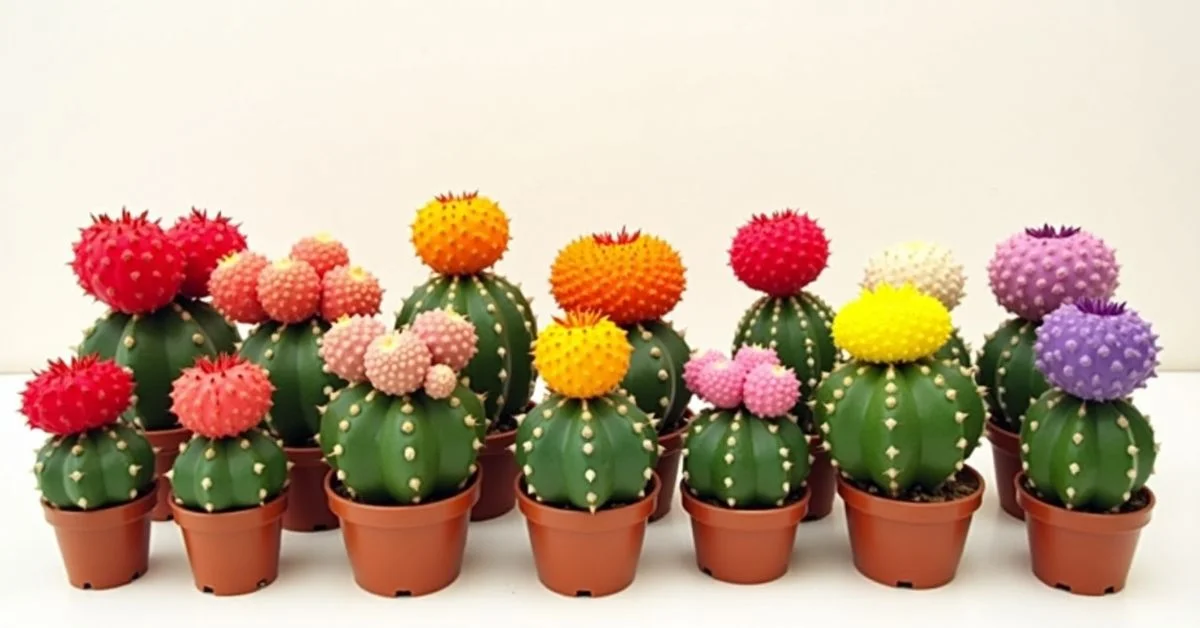
A Moon Cactus is two plants in one. The colorful top part is called Gymnocalycium mihanovichii, which doesn’t have chlorophyll, so it can’t survive alone. It’s grafted (attached) to the green bottom cactus, often Hylocereus, which helps it grow by supplying it with nutrients. This is why the Moon Cactus looks so unique, almost like a small cactus wearing a bright hat. There are different types of moon cactus.
Sunlight Needs for a Moon Cactus
Sunlight is important, but too much direct light can hurt this plant. Since the top part doesn’t have chlorophyll, it’s more sensitive than other cacti.
How much light does it need?
- Bright but indirect light is best.
- A windowsill with filtered sunlight works well.
- Avoid placing it in full sun all day, especially in summer.
If the Moon Cactus gets too much sun, the colors may fade, or it may get sunburned. On the other hand, if it doesn’t get enough light, it may stop growing or begin to rot.
How to Water a Moon Cactus?
Watering is one of the most important parts of Moon Cactus care. It’s also where many people go wrong.
Watering tips:
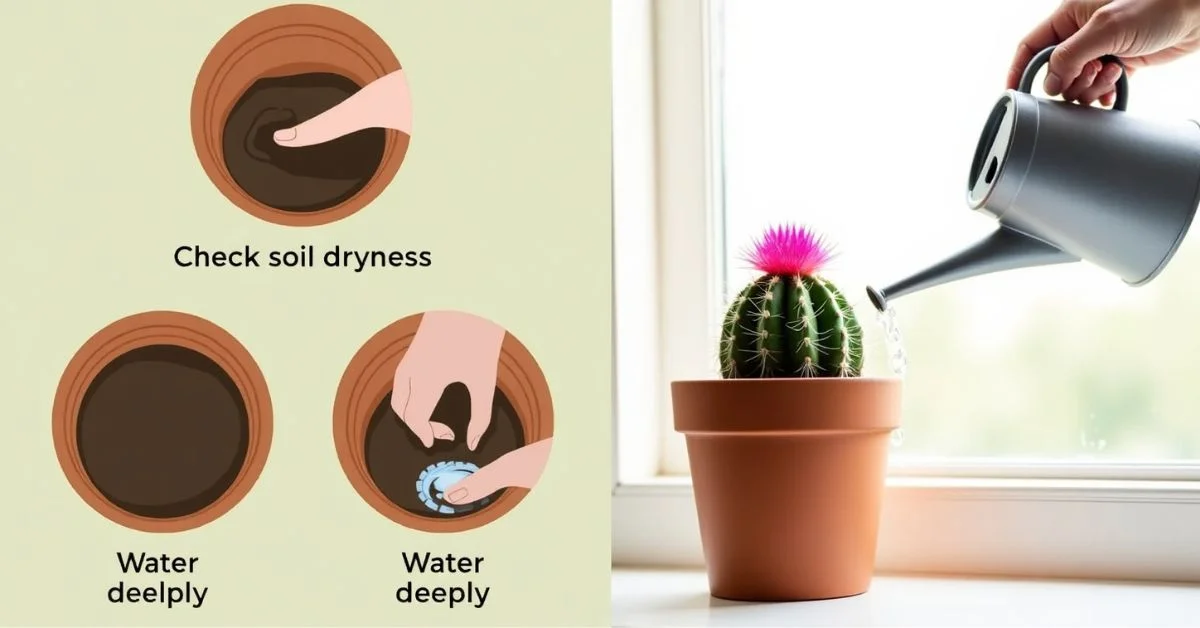
- Water only when the soil is completely dry.
- Stick your finger into the soil about 1 inch to check.
- Water deeply, then let the extra water drain out fully.
- Never let it sit in water, or the roots can rot.
During warmer months (spring and summer), you might water it every 2–3 weeks. In winter, watering once a month or even less is often enough.
Best Soil for a Moon Cactus
Moon Cacti like soil that drains fast. Regular potting soil holds too much moisture and can cause root rot.
Use this type of soil:
- Cactus or succulent potting mix
Or mix your usage:
- 2 parts potting soil
- 1 part sand or perlite
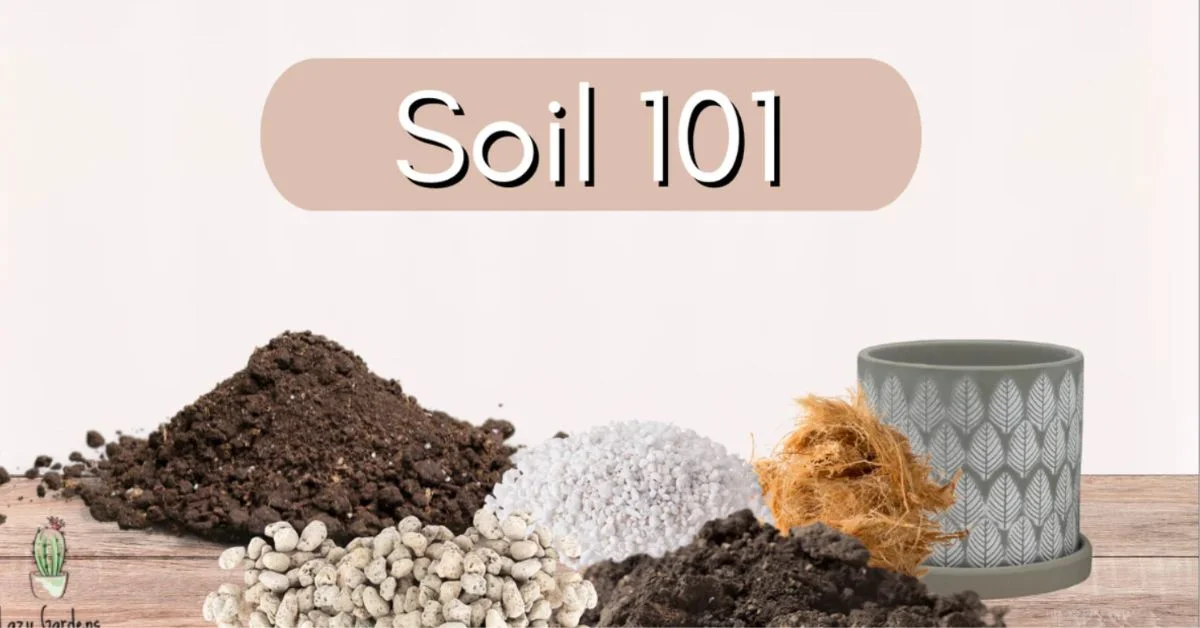
This kind of soil allows water to flow through quickly, so the roots stay healthy.
Choosing the Right Pot
A Moon Cactus doesn’t need a big pot. Too much space can lead to too much moisture in the soil.
What to look for in a pot:
- A small pot that fits the plant’s size
- Must have drainage holes at the bottom
- Clay or terracotta pots are great because they let the soil dry out faster
If water collects at the bottom of the pot, your cactus can easily get root rot, so always make sure the pot drains well.
Ideal Temperature and Humidity
Moon Cactus is a desert plant, so it likes warm and dry places.
Best conditions for growth:
- Temperature between 65°F to 80°F (18°C to 27°C)
- Can’t survive in frost or freezing weather
- Low humidity is better
If it’s too cold or damp, the cactus may stop growing or begin to rot. So keep it away from cold windows or areas with a lot of moisture, like the bathroom.
Repotting Your Moon Cactus
Moon Cacti don’t need repotting often, but if the bottom cactus outgrows the pot or starts to rot, it might be time.
When and how to repot:
- Every 2–3 years, or when the roots outgrow the pot
- Choose a pot just one size larger
- Be gentle with the roots
- Let the cactus dry for a day after repotting before watering
Always wear gloves when handling cacti to avoid getting poked!
Common Problems and Solutions
Even healthy Moon Cacti can run into trouble sometimes. Here are a few common problems and how to fix them:
- Soft or mushy stem: Too much water, cut back on watering.
- Shriveled top: Not enough water or too much sun, adjust your care.
- Color fading: Could be too much sun, move to a spot with filtered light.
- Rotting base: Likely from poor drainage, repot in fresh, dry soil.
Keep an eye on your plant, and if anything looks off, take action early.
Will My Moon Cactus Bloom?
Yes, some Moon Cacti bloom! While the colorful top is already stunning, it may produce small flowers in pink, white, or red during the summer if it’s very healthy. However, not all Moon Cacti bloom, especially if they don’t get enough light or are under stress.
Grafting a Moon Cactus
This step is optional, but if the green base of your Moon Cactus dies, you can try grafting the colorful top onto a new healthy rootstock.
Steps to graft:
- Cut the top cactus and a new green base cactus with a clean blade
- Press the two pieces together and secure with rubber bands
- Let them sit for a few weeks while they bond
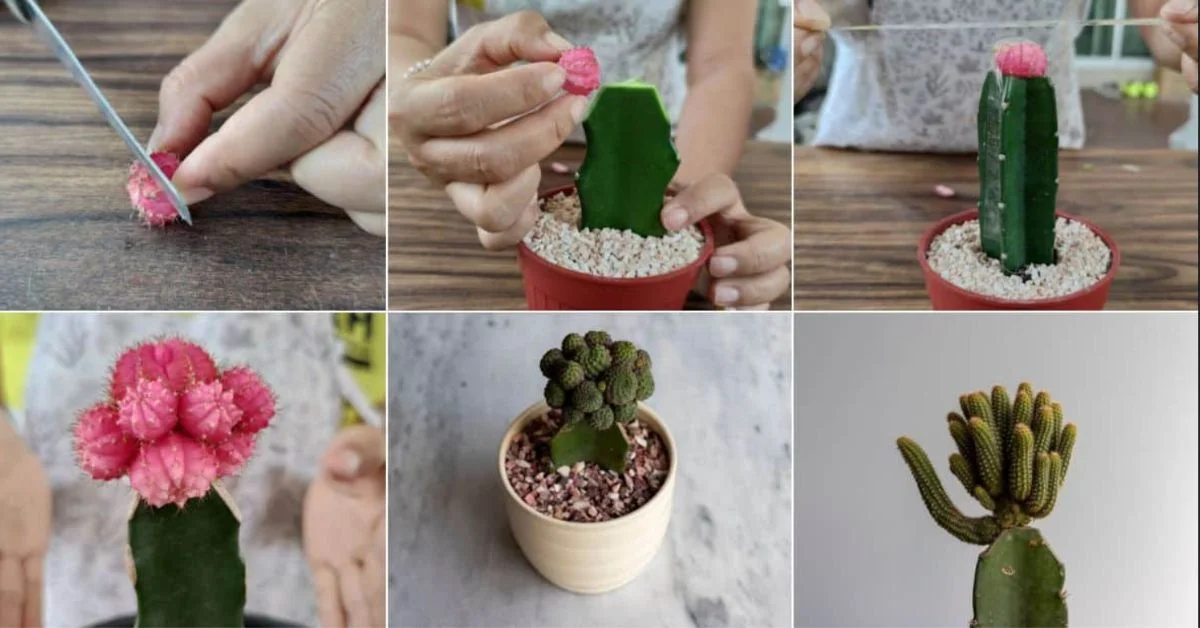
This is a bit advanced, but it’s a fun way to save a dying Moon Cactus or grow new ones.
Conclusion
Taking care of a Moon Cactus isn’t hard if you follow a few simple steps. This unique plant, with its bright top and green base, can bring a pop of color to your home or workspace. The key to keeping it healthy is to provide bright, indirect sunlight, use well-draining soil, and avoid overwatering. Choose a pot with drainage holes and place it in a warm, dry area where it can thrive.