
Table of Contents
- What Makes Kodak Disposable Cameras Special?
- Best Kodak Disposable Models
- Why Choose Kodak Disposable: Real‑World Benefits?
- Tips for Better Kodak Disposable Photos
- What Happens After You Finish the Roll?
- Where Kodak Disposables Shine?
- Developing and Sharing Prints
- Kodak Disposable vs. Digital Cameras
- Conclusion
Imagine grabbing a small, lightweight camera, pointing it at your moments, and clicking, no settings, no fuss. That’s the charm of a Kodak disposable camera. It’s preloaded with film and ready to go. You wind, shoot, and flash when needed. Ideal for sunny trips, dimly lit rooms, beach days, or weddings, it brings analog warmth to every snap. Let’s explore why it’s a go‑to tool for casual photographers, party guests, adventurous wanderers, and nostalgic souls.
What Makes Kodak Disposable Cameras Special?
Point‑and‑shoot simplicity
No menu, no settings aim and press. Perfect when you want to keep things stress‑free.
Built‑in flash & ISO 800 film
Many Kodak disposables, such as the iconic FunSaver, pack ISO 800 film and a built-in flash. They capture sharp shots indoors or at dusk with the same ease they do in bright daylight.
Vintage film look
Kodak’s color film delivers bright, nostalgic tones and gentle grain. No two photos look exactly alike, it’s part of the magic of analog photography.
Portable and affordable
Compact, pocket-sized, and light grab it and go. Typically priced between $15–20, including the film inside.
Eco-conscious recycling
Many labs recycle disposables post-development: they recover batteries and reuse parts. Kodak participates, making the fun slightly greener.
Best Kodak Disposable Models
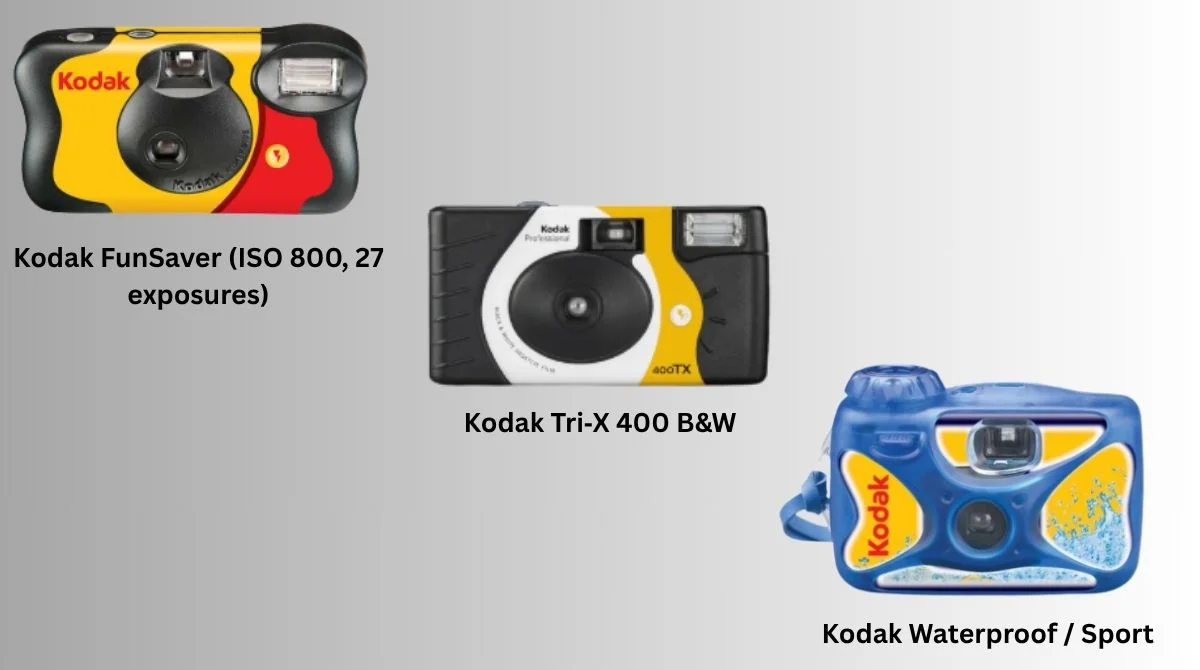
Kodak FunSaver (ISO 800, 27 exposures)
The classic choice: easy to find, with vibrant colors, sharpness, and just enough grain. A smart pick for gatherings and casual shoots.
Kodak Tri‑X 400 B&W
For black-and-white lovers, this model features a superior lens and dramatic, grainy images. Great for moody shots and artistic flair.
Kodak Waterproof / Sport
Dive into fun with water-resistant fun ideal for beach days and shallow pools. Just watch the depth rating (usually ~15 m).
Why Choose Kodak Disposable: Real‑World Benefits?
Easy, no-tech hassle
Perfect for when you don’t want to fuss with settings or battery levels just shoot.
Delayed surprise
No reviews mean more anticipation and joy when prints arrive. Every shot feels like opening a gift.
Intentional shooting
With only 27 shots per roll, you think before shooting, making each click count.
Physical prints
Digital is one thing, but actual photos printed and held feel special and great for albums and memory boxes.
Tips for Better Kodak Disposable Photos
- Light matters: Use flash indoors or at night. Flash works well within 1.2–3 m.
- Keep subjects 1.2 m+ away: Fixed focus needs a minimum distance to avoid blurry shots.
- Wind fully: Always wind after each shot to avoid double exposures.
- Store film smartly: Keep cool and out of direct sunlight to preserve image quality.
- Recycle: Send the whole camera to a lab that recycles the plastic and recovers batteries. Ask before dropping it off.
What Happens After You Finish the Roll?
Once you’ve taken all the shots:
- Drop the camera at a local photo lab or send it to an online film development service.
- You can get printed photos, digital scans, or both.
- Most labs recycle the plastic camera body and batteries.
Depending on the lab, you may receive your photos within a few days to a couple of weeks. Holding those prints in your hands brings a feeling digital photos can’t always match.
Where Kodak Disposables Shine?
- Weddings & events: FunSaver’s retro charm and warm color make it a hit with guests, capturing candid and forgotten moments.
- Travel diaries: Rugged for trips you don’t stress about losing or damaging them.
- Family fun: Great for kids learning photography, simple, and durable.
- Outdoor adventures: Weather-resistant versions are great for hikes, beaches, and camping.
Developing and Sharing Prints
Take your used camera to any photo lab, and they’ll develop it just like normal film. Labs often let you:
- Print 4×6 or larger photos.
- Digitally scan negatives for online backup.
- Archive images on a USB or cloud.
- Recycle the camera body afterward.
Kodak Disposable vs. Digital Cameras
| Feature Kodak | k Disposable Camera Digital | l Cameras/Smartphones |
|---|---|---|
| Ease of use | Super simple, point & shoot | Complex menus, settings |
| Instant preview | Not available | Available |
| Experience | Analog, tactile, nostalgic | Modern, Instant |
| Picture count | 27 or 39 exposures | Unlimited |
| Surprise factor | High, no previews | Low, preview & delete |
| Cost | $15–20 per camera + film decode | Varies; higher initial cost |
Conclusion
A Kodak disposable camera gives a slice of nostalgia, unpredictability, and simplicity in a modern age obsessed with perfection and filters. It’s not about clarity, it’s about feeling. It encourages slow moments, real memories, and surprise when photos return. It’s fun, affordable, and perfect for capturing candid, analog-style memories. Next time you want to switch off and just live in the moment, grab a Kodak disposable. You’ll shoot with intention, enjoy the wait, and end up with soulful prints you can hold and share. It’s simple, timeless, and endlessly charming.
Related Topic: Tips for Selecting the Best Sports Camcorder